

Your Condo's "High Security" Might Be the Thing That Kills You
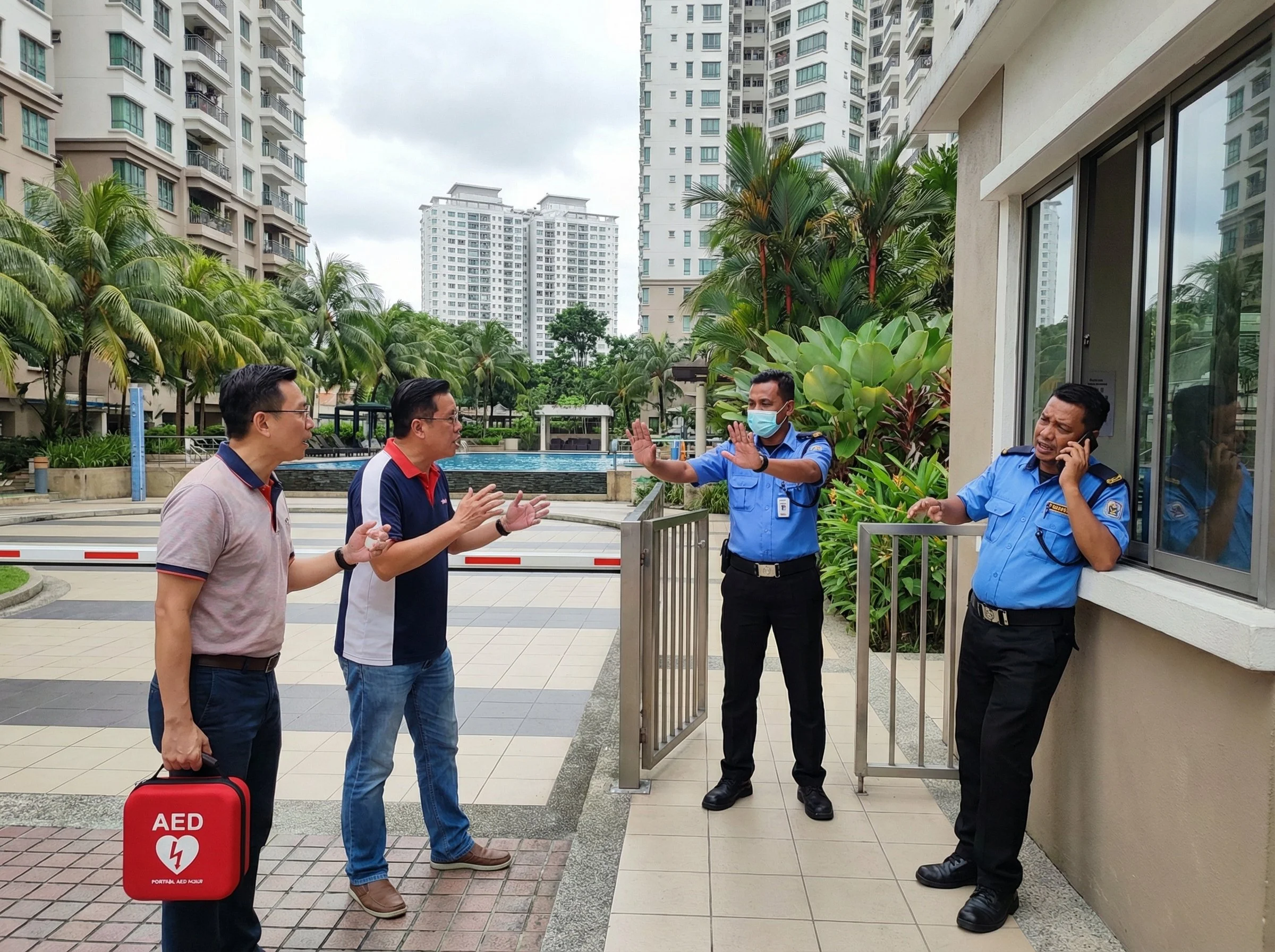
A woman around 50 y/o in Selangor died. Not because help wasn't called. But because a security guard wouldn't open the gate.
What Happened
In Selangor, a woman suffered a medical emergency inside her condominium unit. Someone who knew she was in trouble — rushed to the condo to help.
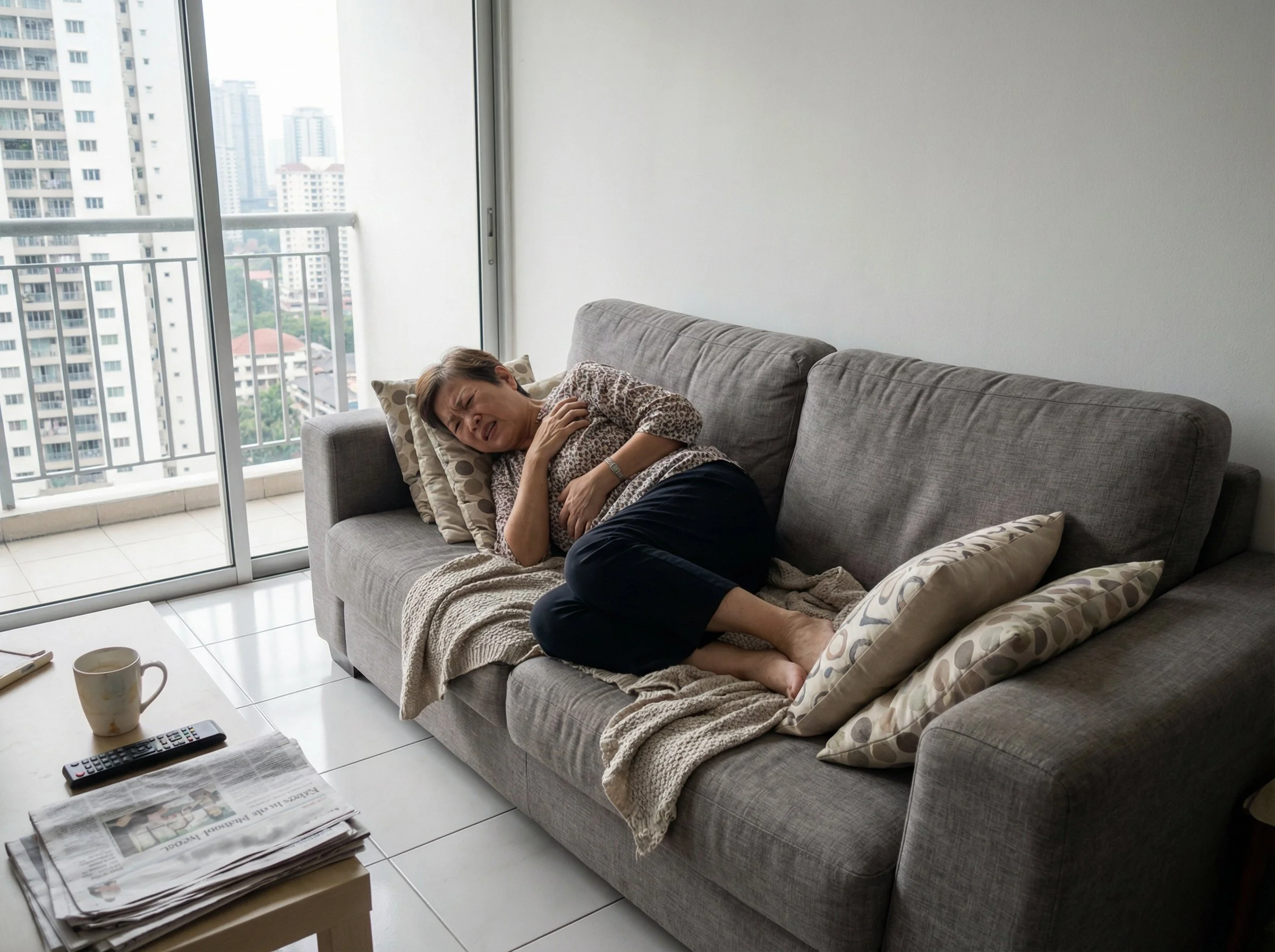
The security guard at the guardhouse refused entry.
“It is an medical emergency. Guards stood firm and denied entry for 45 minutes in condo until obtained clearance from their top bosses.” - Uncle Kentang - Chee Heng Kuan has said.
By the time anyone reached the unit, the woman had passed away.
She was already gone.
What Was Really Going On
This wasn't a malicious act. The guards were probably doing exactly what they were trained to do — follow the SOP to the letter. Verify identity or await for a visitor QR from the owner. Get clearance. Log the visit. No exceptions.
The problem is that the SOP was built for security, not for emergencies. And nobody told the guards — or the management — that those are two completely different situations.
Here's the gap: Malaysia's Strata Management Act 2013 (Act 757) governs how condominiums are managed through JMBs and Management Corporations. It covers maintenance fees, by-laws, and facilities. What it does not explicitly mandate is an emergency response protocol for security personnel at the gate. That gap is left to individual condo managements — and most of them fill it with the same rigid visitor SOP they use for couriers.
The result? A well-guarded condo that couldn't save one of its own residents.
What Happened as a Result
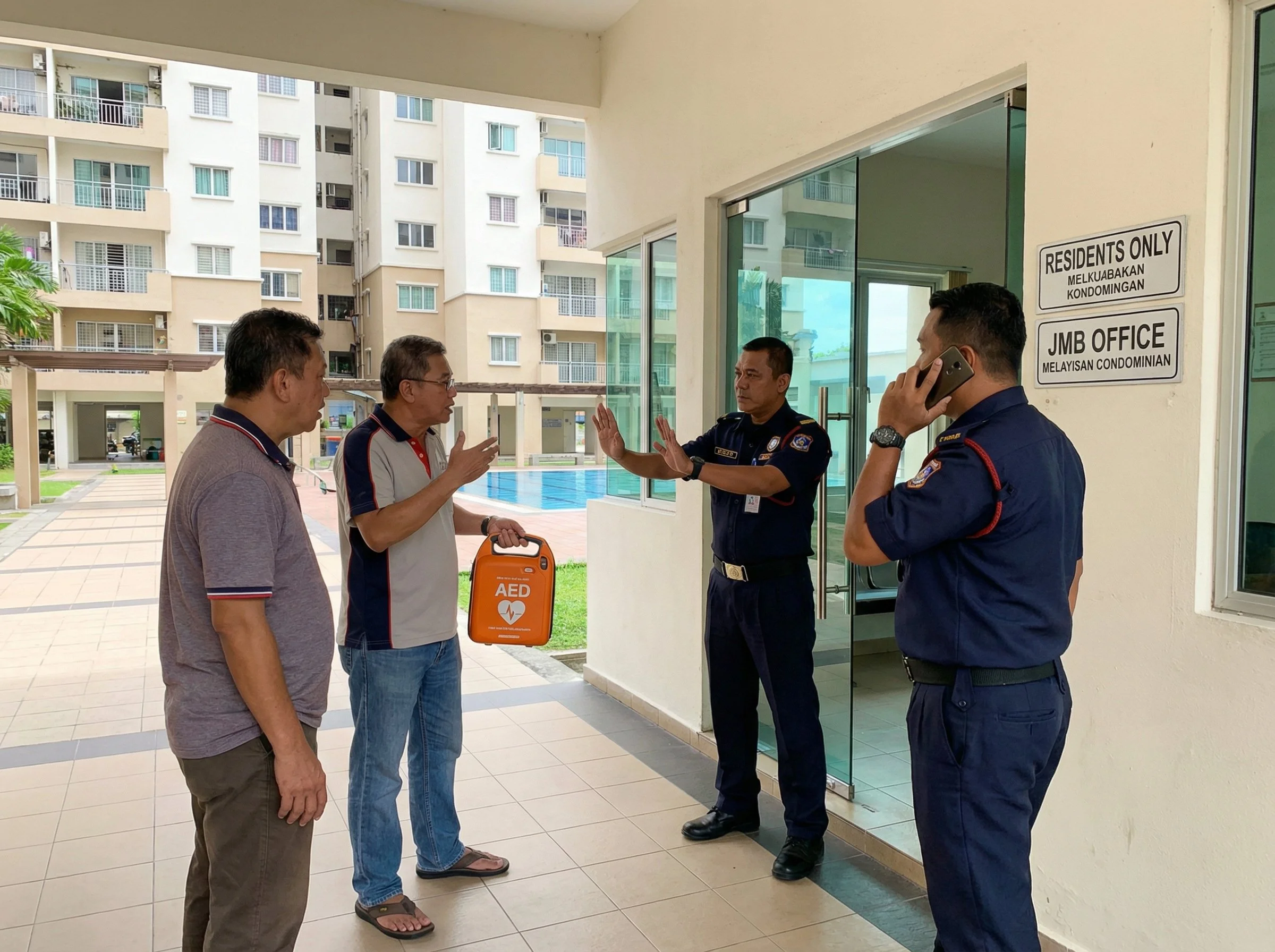
The woman died. Her family lost her. The response team who rushed to help had to live with standing at that gate, helpless, for 45 minutes.
The condo management now faces public outrage, questions about liability, and — potentially — legal scrutiny.
But beyond this one tragedy, the story exposed something systemic: across Malaysia, thousands of condominiums are running the same playbook. High fences. Strict visitor logs. Guards trained to say no first and ask questions later.
And zero protocol for what to do when a life is on the line.
What we think could have been done
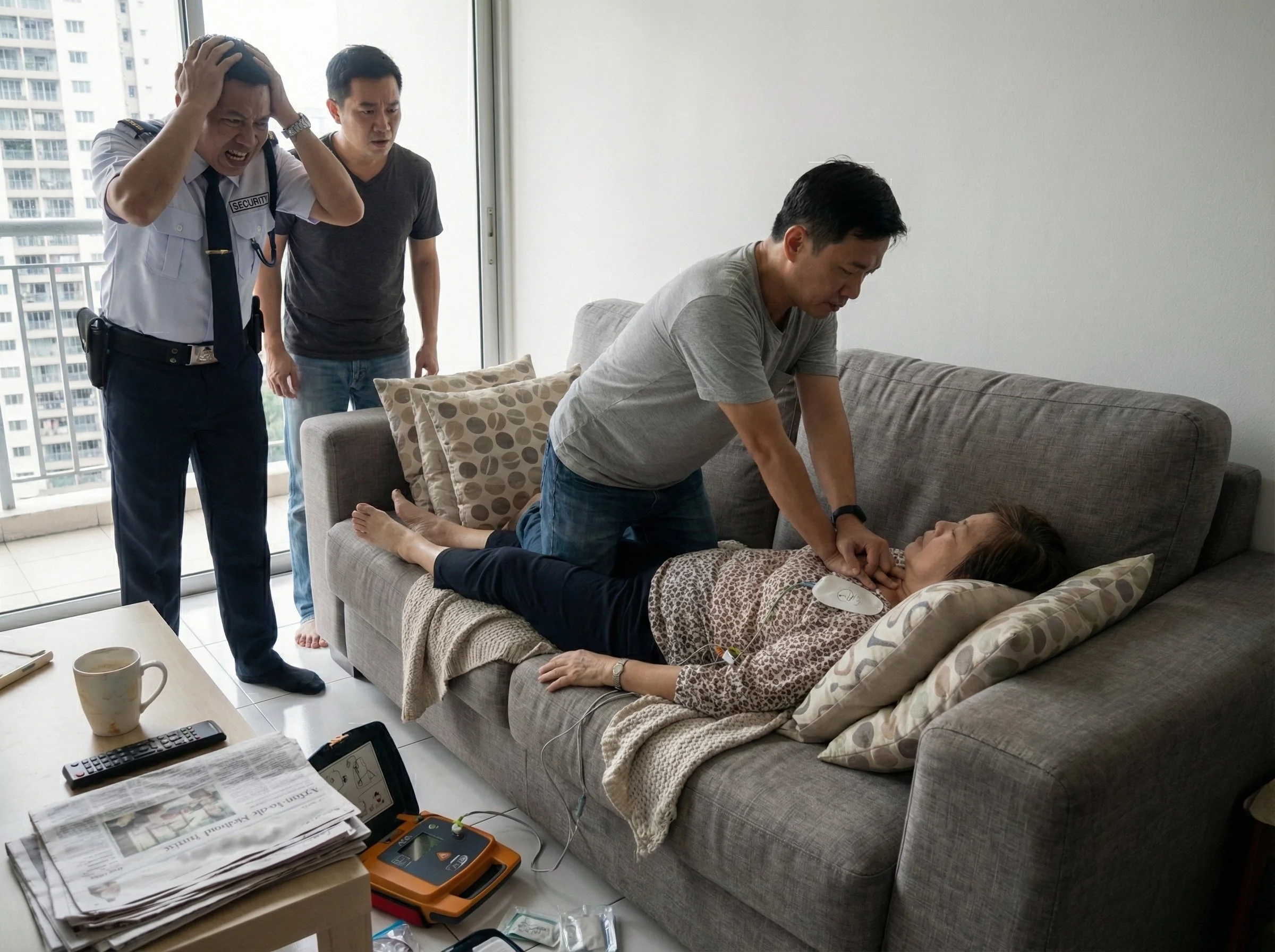
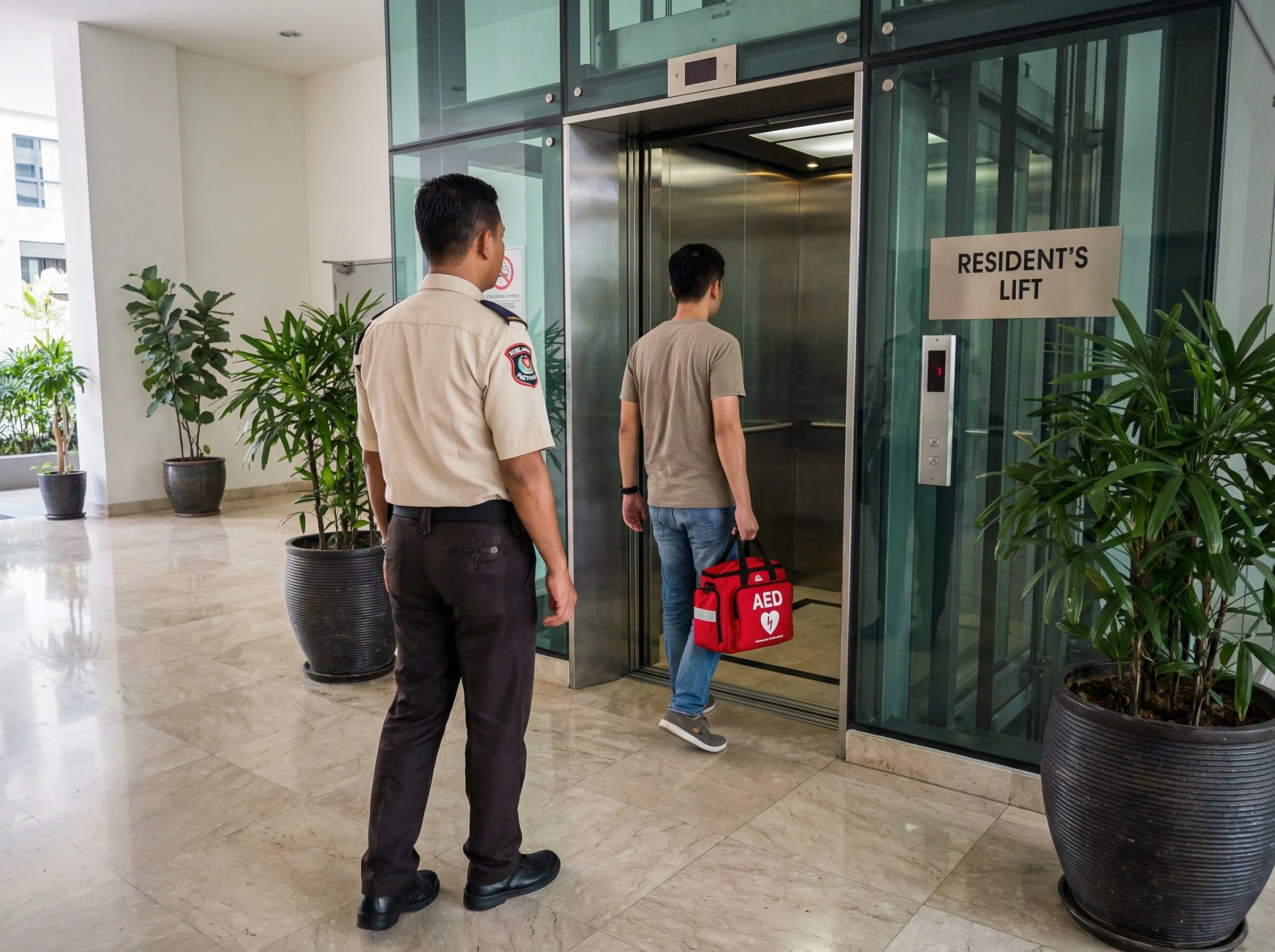
Although we do not know the full story from both sides, we are not taking any sides. Our suggestion is that in doubt, the guards should escort the emergency personnel to the unit to address the emergency while maintaining safety and security to the other residents.
What You Should Do as an Owner
Don't wait for your management to figure this out. Take these steps now.
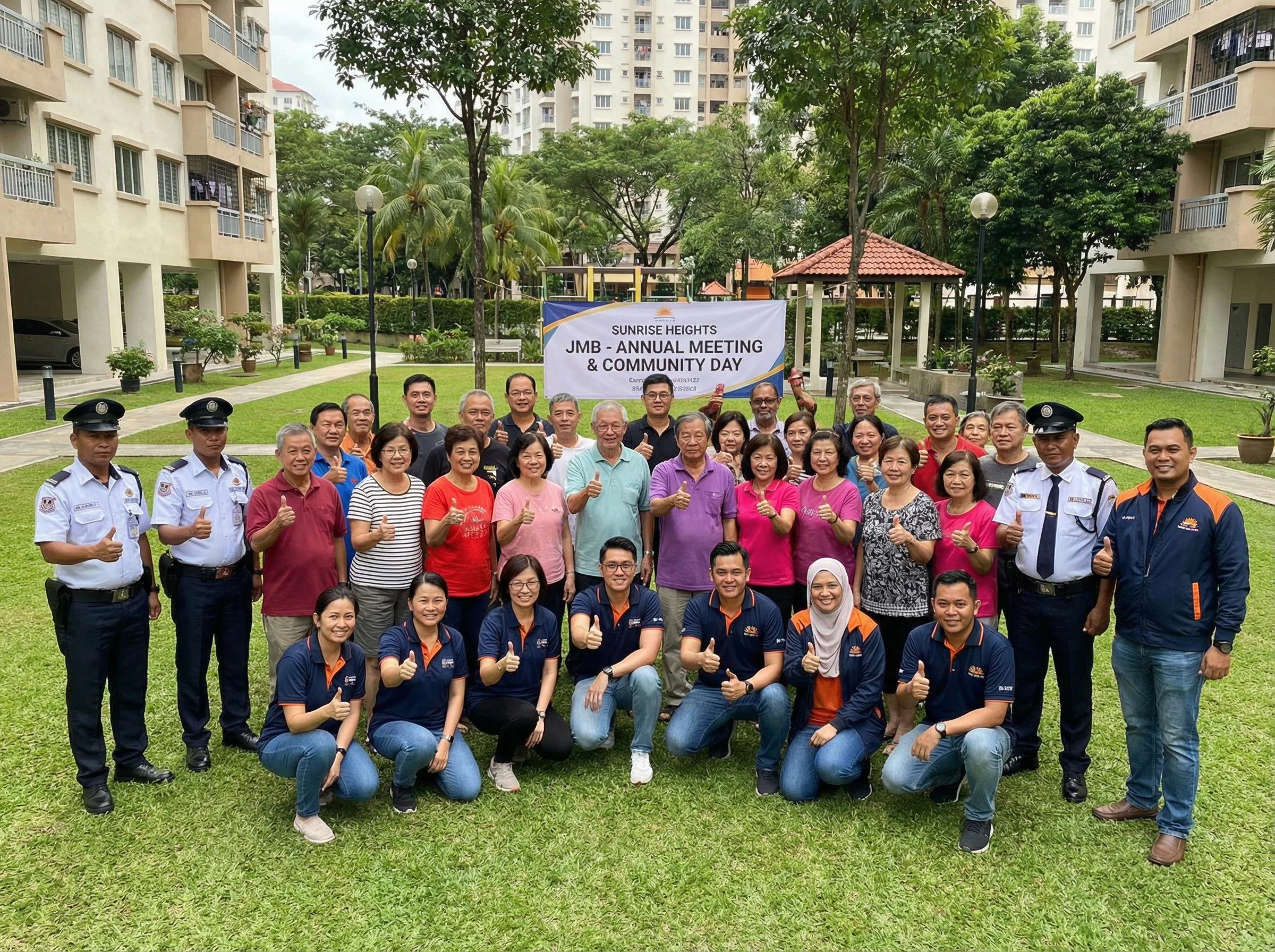
1. Demand a written emergency access protocol at your next AGM. Under the SMA 2013, owners have the right to raise by-law proposals at AGMs. Push your JMB or MC to include a clearly defined Emergency Fast-Pass procedure — a documented process that allows immediate access for anyone who presents a credible medical emergency, verified by calling the unit directly, checking with a neighbour, or accepting an incoming ambulance with no delay.
2. Register an emergency contact with your management office. Give the front desk the name and number of at least two people who are authorised to be let in without clearance in an emergency — no waiting, no phone tag with supervisors.
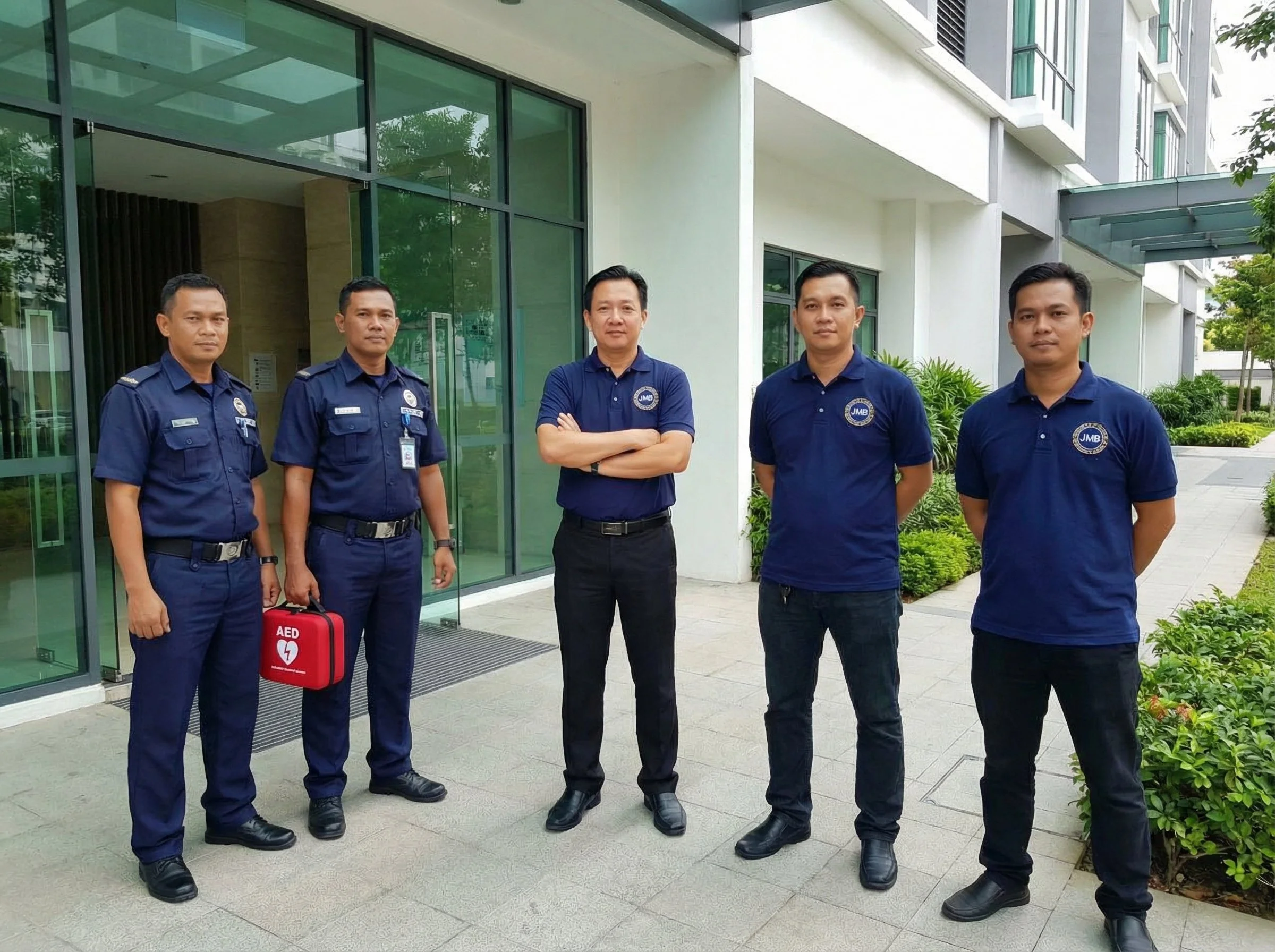
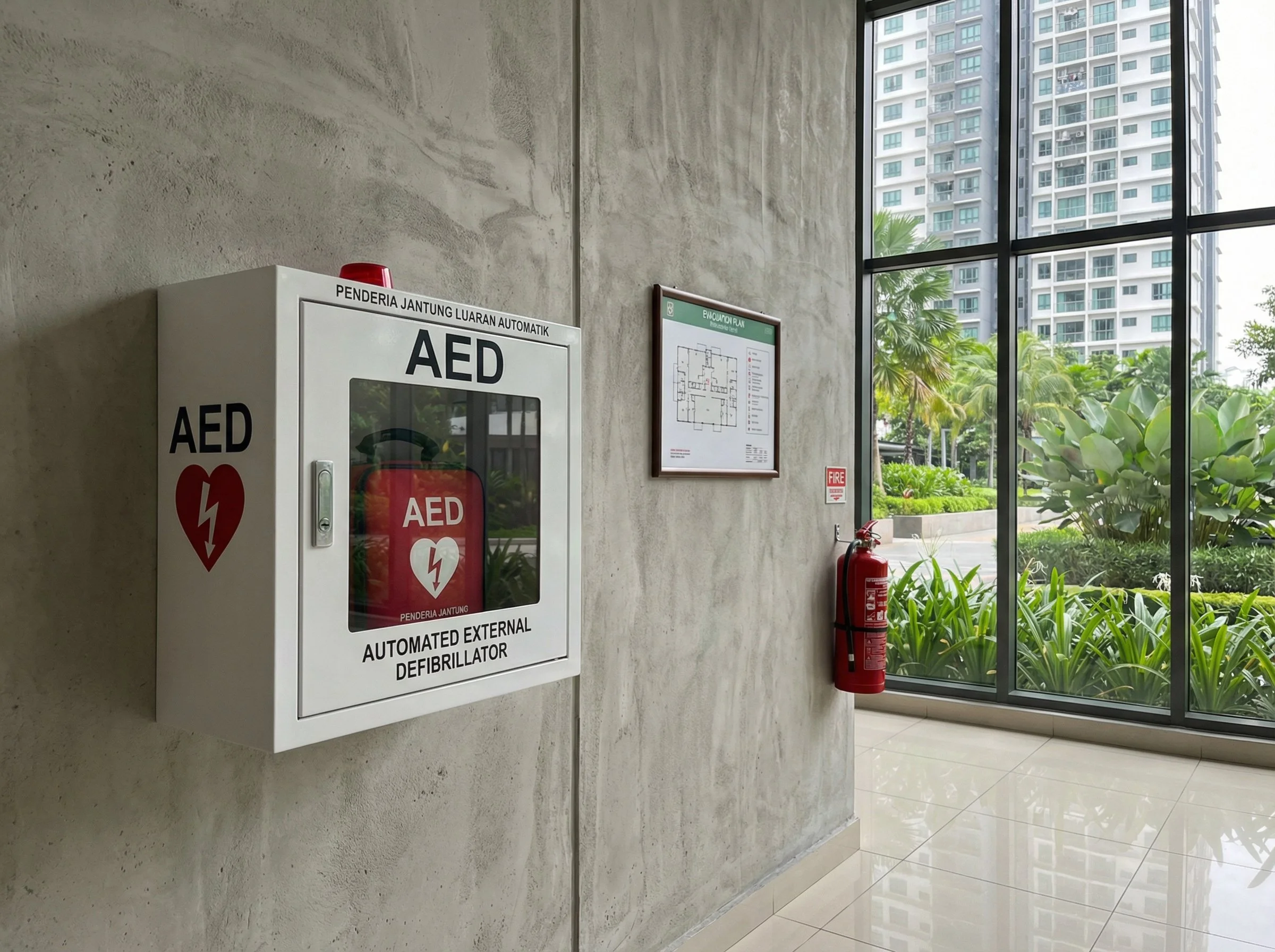
3. Ask management to install an AED (Automated External Defibrillator) in the lobby or guardhouse. In cardiac events, every minute counts. An AED on-site gives a fighting chance before the ambulance arrives. More importantly, ask whether any staff are trained to use it.
4. Make sure your unit number is clearly linked to your contact details in the building directory. In an emergency, responders need to find you fast. An outdated or missing directory entry adds unnecessary delay.
5. Speak to your neighbours. In a medical crisis, your next-door neighbour might be more useful than the ambulance. Know who lives beside you and let them know where a spare key is kept — with a trusted friend, family member, or a smart lockbox. Or just announce in the whatsapp group if you are in a state of emergency, getting their attention and readiness.
What Other Countries Are Doing — And What Malaysia Can Learn
Singapore: The Gold Standard
Singapore has built emergency response into the fabric of everyday residential life. It's not left to individual condo management to figure out.
The Singapore Civil Defence Force (SCDF) operates under a tiered emergency response framework that treats time as the most critical variable. When a cardiac emergency is reported on the 995 hotline, SCDF doesn't just dispatch an ambulance — they simultaneously alert Community First Responders (CFRs) through the myResponder app.
The myResponder app, launched in 2015 and upgraded in 2024, notifies registered volunteers within 400 metres (or up to 1.5km for those responding by vehicle) of a cardiac arrest incident. These are ordinary residents — office workers, retirees, students — who have been trained in CPR and AED use, and who respond before the ambulance arrives.
As of December 2025, over 250,000 Singaporeans are registered CFRs. Collectively, they have responded to over 52,000 cases, helping to save more than 157 cardiac arrest patients who would otherwise have died waiting.
All security officers, including foreigners, must be licensed by the Police Licensing and Regulatory Department (PLRD).
Basic Licensing Units (BLUs): Guards must complete three compulsory WSQ courses:
Guard and Patrol: Basic equipment and patrolling.
Incident Response: Handling emergencies (includes basic medical response protocols).
Threat Observation: Recognizing terrorist threats.
Specialized CERT Training: If the condo is an FSM premise, security guards serving in the CERT must have:
Standard First Aid Certification.
CPR + AED Certification.
Progressive Wage Model (PWM): For Singaporeans/PRs, higher-tier roles (like Security Supervisor) require additional WSQ modules.
Critically, Singapore condominiums and HDB estates are expected to keep access routes unobstructed at all times under SCDF fire and emergency guidelines. Emergency services — including ambulances on lights and sirens — are not subject to the same screening process as regular visitors. The expectation is clear: emergency responders go in first, paperwork comes after.
Singapore also mandates that properties maintain AEDs in accessible public areas, connected to a national registry so that the myResponder app can direct the nearest responder to the nearest device in real time.
The Bottom Line
A condo with high security and zero emergency sense is not a safe condo. It is a well-locked one.
Security is meant to keep threats out. An emergency protocol is about getting help in. These are opposite problems and they need separate answers.
Talk to your JMC. Raise it at your AGM. Put it in writing.
Because the next time a neighbour needs help at 2am, the question shouldn't be whether the guard has clearance.
The question should be: how fast can we get to them?
Do you think all Malaysian Condominium’s will require an AED?
Share this with every condo resident you know. This is a conversation every building committee in Malaysia needs to have — before it becomes a tragedy they have to explain. Images above are AI generated. Any resemblance or detail is not intended and purely coincidental.
